





I remember when I started out in my career in fund management and my company, a joint venture between two giants, one global and one Indian, had a large number of very smart people coming in from mainly the mother lode – America. Along with them, there was a trim set from Singapore. No matter how many smarties we had in the India office, the assumption was, well we are at nil and they are at a hundred and we must learn. And I am talking some near three decades back and we came across fancy words like concentration mix, diffused risks and capitalisation base. Essentially minus the hype and hoopla, it meant keeping a check on how lumpy the portfolio was versus how widespread it was and in what capitalisation band the companies were at. Life was simple.
Cut to the present day and it seems we are in a different universe. Mutual fund size is now getting more on par with the other financial savings and investment verticals like banks, insurance, post office schemes and suchlike. In an increasingly competitive space being different is, in recent times, taking precedence.
And one of the major changes is happening in portfolio construction.
Earlier, the stance was more on capitalisation as a factor. The determinant was largely on whether the fund was focussed on the large capitalised companies or the medium sized companies and then the last was the small sized companies. Sometimes the management was done on a “style basis”, namely “value investing”.
However, in the recent past on, we have seen a new style emerge – the factor investing.
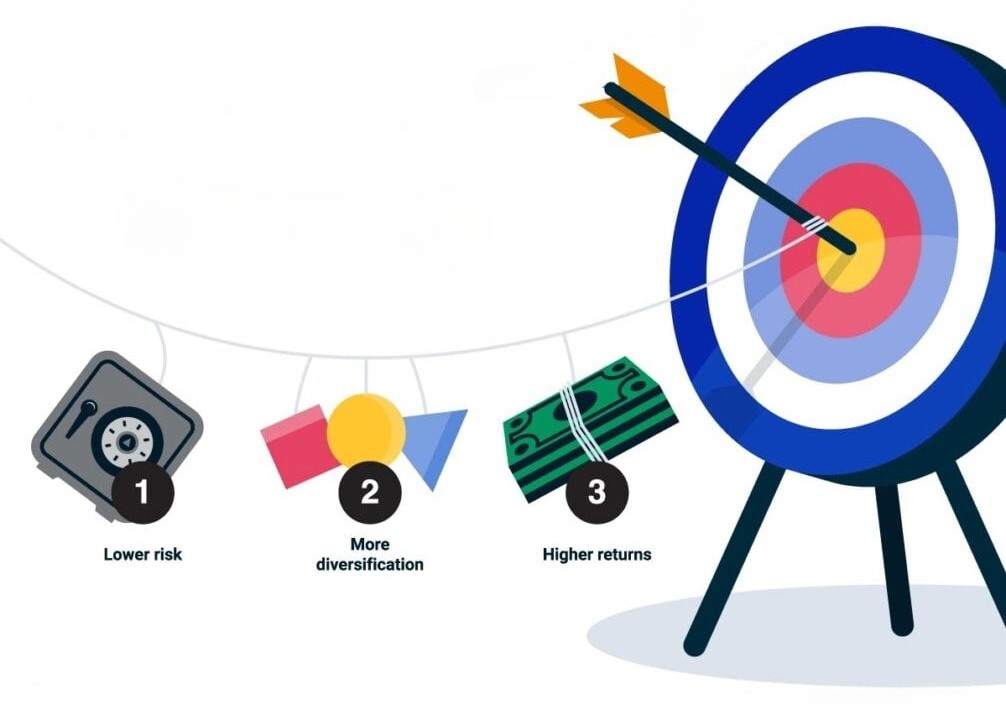
So, what is factor investing? Essentially an investment strategy that involves choosing securities based on attributes that are associated with higher returns and lower risks. This type of investing aims to reduce risk that may otherwise be hidden in a portfolio of securities with similar exposure. Proponents of factor investing argue that this strategy allows investors to make better decisions. (source Investopedia.com).
To keep the explanation simple, let us check the two most popular trends – Growth and Value.
Growth is chasing the returns matrix of companies working. Thus, a growth investor will look into the movement of earnings per share, earnings indexed to growth rates, Return of Equity and Return on investment. There are fancy spin offs from time to time like Growth at Reasonable Price (duh isn’t that Value), but when the idea is to confuse and sell, these monikers come handy.
A value investor will look into more fundamental aspects of the company and the industry. And if the current price of the stock has a gap to the investor’s determination of the “right value”, then that would signal a buy signal to the investor. And of course, vice-versa. So, the value is not really an improvement on the growth style, it is to put it simple, another style.
Quality does something a lot more substantial to the value style. It looks into the price movement of a scrip and grinds down to what the rise/fall can be attributed to. It further grounds down to what is systematic and what is chance. It is not a wholly different style (although many would opine differently) but to my mind it is an improvement on the value investing method. The grind happens by assessing how has the company managed to keep itself ahead of the competition, how does it make and realises prices which competition is unable to, how has the company protected itself from competition all around and how does it essentially ensure competitive inroads not happening in their customers or in their territory. Of course these take into account the economic factors too. There are quality indices which aide passive investments and then there are many who create their own quality portfolios too.
Factor investing is becoming so pervasive that there are actually indices being created to cater to the “factor style”. Over the last 12-18 months, there has been a profusion of style factors used in investing used in fund management. Although many of us would not be familiar with the terms now, it is only a question of time before that happens. The popular ones are
- Low volatility 30
- Equal Weight
- Alpha funds
- Momentum pro, and many more.
Many times these are derived from a mother source (index) and thus assume names like
- Nifty Alpha 50
- Nifty Alpha Low Volatility 30
- Nifty50 Value 20
- Nifty100 Low Volatility 30
- Nifty100 Quality 30
- Nifty100 Equal Weight
Brace yourself for a change in orientation if the fund management space and familiarize the concept. There is a lot of action just around the corner.

Well explained!
As always, a breath of fresh air.
True! Thanks for the update !